
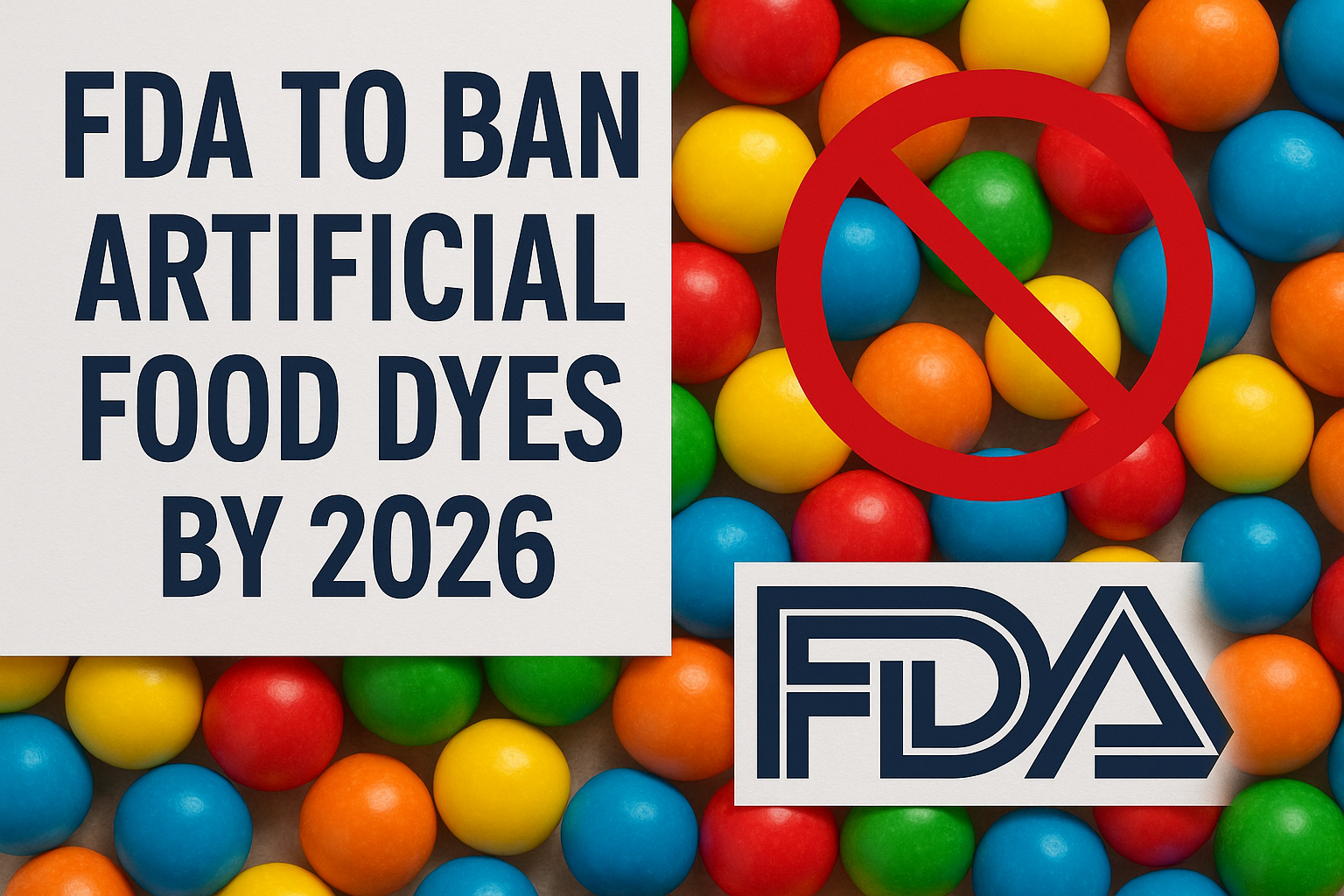
In a landmark move toward healthier food choices, the FDA announced in April 2025 that it will phase out artificial food coloring from the U.S. food supply by the end of 2026. That means the bright reds, yellows, and blues that give your favorite candies, cereals, and snacks their bold colors are on their way out.
The reason? Mounting research—and public pressure—has spotlighted the health concerns tied to synthetic dyes, especially for children. Some studies link these petroleum-based additives to behavioral issues, including hyperactivity, as well as potential cancer risks. While the FDA has long maintained these dyes were safe, the tide has shifted.
One of the most well-known dyes, FD&C Red No. 3 (used in everything from gummies to cake frosting), was officially banned earlier this year. It will be completely removed from food by January 2027 and from ingestible drugs by January 2028.
To make the transition smoother, the FDA has approved three new plant-based color alternatives: blue from red algae (Galdieria extract), butterfly pea flower extract (a deep, vibrant blue), and calcium phosphate (a white or opaque colorant). These natural options offer food makers a way to keep their products visually appealing—without the health concerns.
Big-name brands are already jumping on board. In-N-Out, for example, recently removed artificial coloring from its strawberry shakes and pink lemonade. More companies are expected to follow as the 2026 deadline approaches.
For consumers, this means cleaner labels and potentially fewer health risks—especially for families with young children. So the next time you grab a snack and see a bright hue, you can feel a little better knowing it’s likely coming from a flower or algae—not a lab.
This is more than just a regulatory shift—it’s a cultural one. As the U.S. joins countries like the U.K. and parts of Europe that have already moved away from synthetic food dyes, we may be entering a new era of more transparent, health-conscious eating.
