
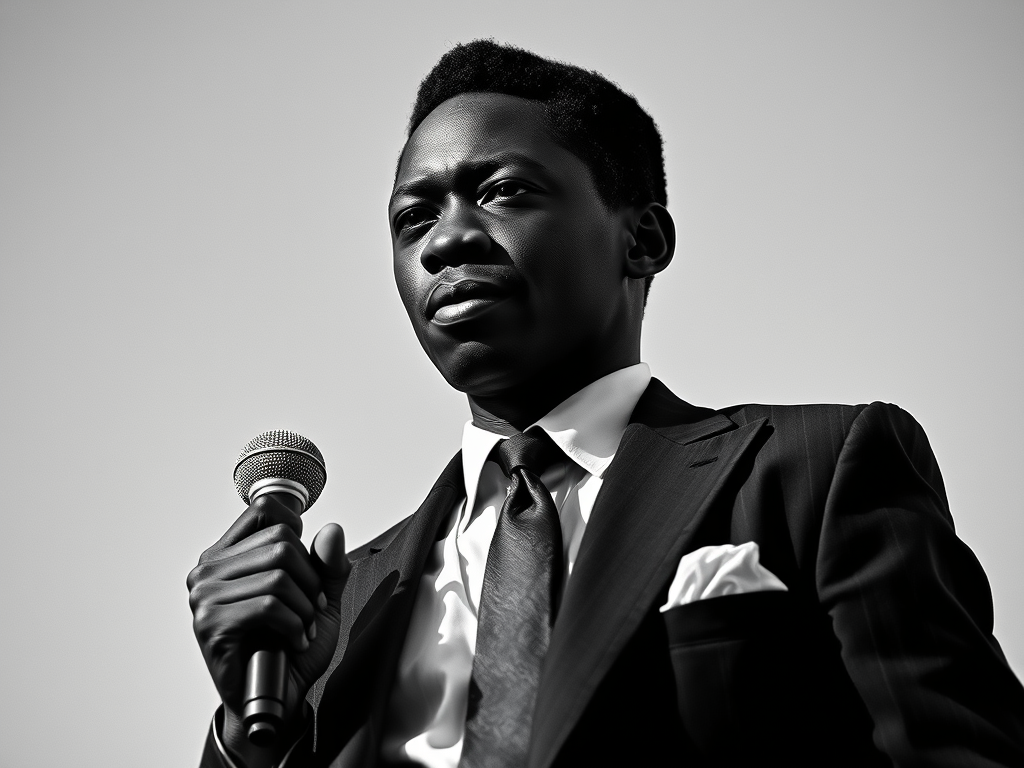
Few figures embody the hope, turmoil, and betrayal of Africa’s struggle for independence more powerfully than Patrice Emery Lumumba, the first democratically elected Prime Minister of the Congo. His story is not just the biography of a man—it is a window into the systemic injustices created and maintained by European imperial powers in Africa. From his humble beginnings to his tragic assassination, Lumumba’s life reflects the collision between African self-determination and the aggressive efforts of foreign powers to maintain control.
Patrice Lumumba was born on July 2, 1925, in the village of Onalua in the Kasai region of the Belgian Congo.
His early life unfolded under one of the most brutal colonial regimes in modern history. Belgium exploited Congo’s land, labor, and people through forced labor, racial segregation, and a deeply discriminatory social system.
Upbringing: A Young Man Formed by Colonial Congo
Yet in the middle of this oppressive environment, Lumumba’s intellect and drive stood out:
He was largely self-educated and voraciously read French political literature. He worked various jobs—postal worker, brewery clerk, and others—where he witnessed the mistreatment of Black Congolese workers. He became politically conscious early, recognizing how Belgium kept Congolese people deliberately uneducated and disenfranchised.
This upbringing molded Lumumba into a sharp critic of colonialism. His exposure to injustice wasn’t abstract—it was daily life.
His Path to Power — and Why It Was a Struggle From the Start
Lumumba entered politics in the 1950s by becoming active in anti-colonial movements. He founded the Mouvement National Congolais (MNC), the only political party at the time advocating for a unified Congo instead of tribal or regional fragmentation.
His entry into leadership was marked by three major obstacles:
Obstacle 1: Belgium’s Racial System
Belgium’s colonial administration never intended to hand power to educated, politically vocal Africans.
Congolese politicians were closely monitored, restricted, and sometimes jailed—Lumumba included.
Obstacle 2: Ethnic Divisions Encouraged by Belgium
Belgian administrators intentionally fostered tribal divisions to keep the population fractured.
As a leader who wanted national unity, Lumumba faced pushback from groups who were pushed to believe independence meant fragmentation.
Obstacle 3: Western Fear of African Nationalism
During the Cold War, any African leader calling for independence was labeled a “threat,” especially if they demanded control of natural resources.
Lumumba’s stance on sovereignty made him a target long before he took office.
Despite these forces, Congo held its first national elections in 1960—and Lumumba rose to become the first Prime Minister.
Gaining Traction and Inspiring the People
Lumumba’s charisma and plainspoken honesty electrified the Congolese population.
His June 30, 1960 independence speech—delivered in front of the Belgian king—was a turning point.
While the Belgian monarch praised colonialism as beneficial, Lumumba boldly told the truth:
Congo achieved independence through struggle, not benevolence. Belgian rule was marked by violence, forced labor, and humiliation. The new Congo would control its own destiny.
This speech made Lumumba a hero across Africa and the diaspora.
But it also made him a marked man.
As Lumumba gained traction:
Belgium feared losing control of Congo’s mining wealth. The U.S. and European powers feared he would turn to the Soviet Union. Internal rivals—supported by foreign powers—worked to weaken him.
Instability rapidly grew as secessionist movements emerged, many backed by Belgian interests. As Lumumba fought to maintain national unity, pressure mounted against him from all sides.
The End: His Removal, Capture, and Assassination
By late 1960, a coup led by Joseph Mobutu—supported by Belgium and the CIA—removed Lumumba from power.
He was placed under house arrest, escaped, was recaptured, and finally transported to Katanga, a secessionist region heavily backed by foreign mining corporations.
On January 17, 1961, Patrice Lumumba was executed by a firing squad.
His body was destroyed to erase evidence.
Years later, even Belgian officials admitted that their government played a role in his death.
What Lumumba’s Death Represents
Lumumba wasn’t removed for corruption, incompetence, or lack of support.
He was silenced because he demanded:
Control of Congo’s natural resources A united African state Freedom from European domination Economic independence beyond colonial influence
These were “threats” to the interests of Western powers who had long profited from Africa’s land and labor.
Conclusion: Lumumba’s Legacy and the Injustice of Imperialism
Patrice Lumumba’s life and death demonstrate that European imperialism did not end with independence ceremonies—it evolved.
New forms of control—political interference, assassinations, resource extraction, and puppet governments—were used to keep African nations weak and dependent.
Lumumba represented the possibility of a Congo that was:
Self-governing United Economically independent Free from foreign exploitation
And for that, he paid the ultimate price.
Yet today, Lumumba remains a powerful symbol of African pride and resistance.
His story is a reminder that the fight against imperialism was never simply about politics—it was about reclaiming humanity, dignity, and destiny
