
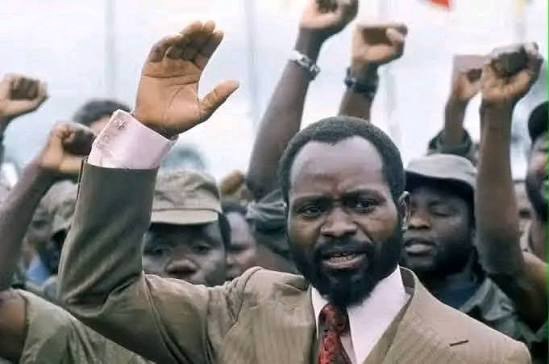
By Jamahl Hokstam
Samora Moisés Machel stands as one of Africa’s most influential post-colonial leaders. As the first President of Mozambique, he guided the young nation through the turbulent years following independence and became a symbol of determination, unity, and anti-colonial struggle across the continent.

Early Life and Rise to Activism
Born on September 29, 1933, in the village of Madragoa, Samora Machel grew up under the harsh realities of Portuguese colonial rule. His family were farmers, and like many Mozambicans at the time, they lived under rigid systems of forced labor and discriminatory policies. These injustices shaped his worldview early, fueling a sense of responsibility to fight for his people.
Machel initially trained as a nurse, and his work in hospitals exposed him to the inequalities embedded in colonial society. Witnessing the lack of medical care for Africans while Europeans received preferential treatment pushed him toward political activism. By the early 1960s, he joined the Front for the Liberation of Mozambique (FRELIMO), the organization leading the armed resistance against Portuguese rule.
The Road to Leadership
Machel quickly became a respected military strategist and political thinker within FRELIMO. After the assassination of FRELIMO leader Eduardo Mondlane in 1969, Machel rose to prominence and eventually became president of the movement. Under his leadership, FRELIMO expanded its operations, strengthened international support, and intensified the struggle for independence.

When Mozambique finally achieved independence on June 25, 1975, Samora Machel became its first president, marking a defining moment for the country and the African liberation movement.
Building a New Nation

As president, Machel inherited a country ravaged by war, poverty, and an economy designed only to benefit colonial interests. He embraced a socialist model, believing it offered the best route toward equality and national reconstruction. His government focused on:
Expanding healthcare and education Nationalizing key industries Redistributing land for community benefit Promoting literacy and self-reliance.
Machel championed unity, famously declaring, “For the nation to live, the tribe must die,” urging Mozambicans to see themselves not through ethnic lines but as one people with a shared future.
Regional Influence and Struggle
Beyond Mozambique, Samora Machel’s leadership had profound regional significance. He openly supported liberation movements in Zimbabwe and South Africa, opposing apartheid and white-minority rule. This stance made him a target of destabilization efforts from apartheid-era South Africa, contributing to internal conflict and economic hardship.
Despite these challenges, Machel remained firm in his belief that Mozambique’s freedom was tied to the freedom of all African nations.
A Tragic End

On October 19, 1986, Samora Machel died in a mysterious plane crash near the South African border. The circumstances remain debated, with many believing it was the result of external sabotage. His death shocked the continent, but his legacy as a revolutionary, nation-builder, and advocate for African unity endures.
Legacy
Today, Samora Machel is remembered as a leader who balanced military strength with deep compassion for his people. His commitment to ending colonial domination and creating a more equal society left an indelible mark on Mozambique’s history.
His life continues to inspire freedom movements, political thinkers, and leaders across Africa — a reminder of the power of courage, sacrifice, and vision in shaping a nation.
