
By Jamahl Hokstam
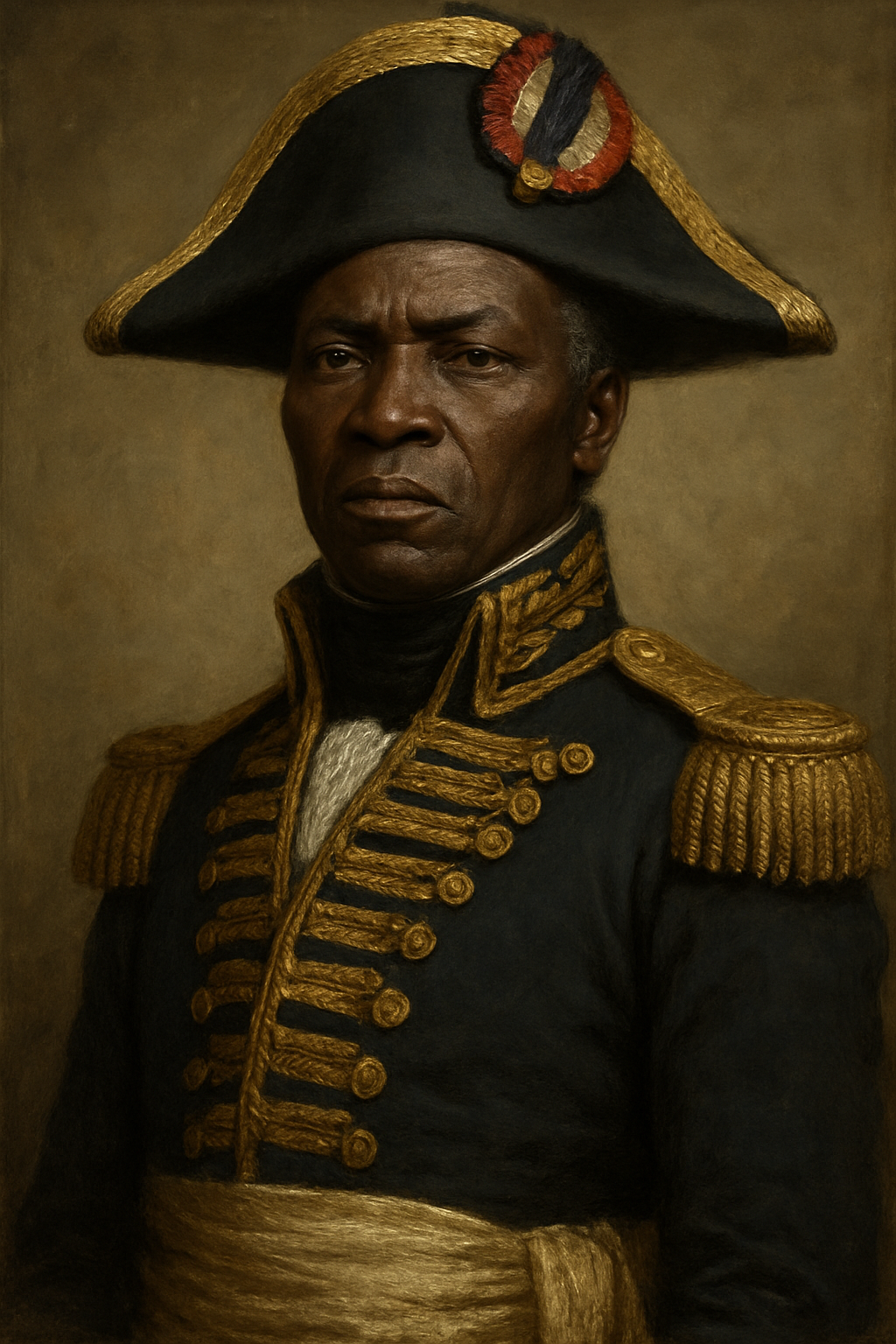
Toussaint Louverture was a towering figure of the late 18th and early 19th centuries—a Haitian revolutionary, military strategist, and statesman whose leadership reshaped the course of world history. Born into slavery in the French colony of Saint-Domingue, Louverture would rise to become the central figure of the Haitian Revolution, leading the only successful large-scale slave uprising in history and paving the way for the birth of the first Black-led republic in the Western Hemisphere.
Louverture emerged as a leader during the early phases of the Haitian Revolution in the 1790s. As competing colonial powers—France, Spain, and Britain—fought for control of the Caribbean, enslaved Africans seized the moment to demand their freedom. Toussaint’s brilliance as a military commander quickly set him apart. His tactical skill, diplomatic agility, and deep commitment to liberty allowed him to outmaneuver European armies that were far better equipped.

By 1797, after a series of decisive military victories, Toussaint Louverture took control of the colony of Saint-Domingue. He crushed internal rivals, pushed back British invasions, and negotiated strategically with the French Republic, which had abolished slavery in 1794. Recognizing his unmatched influence, French officials appointed him Governor-General of the colony. But Toussaint saw a broader vision—one that included unity, stability, and lasting independence.
He extended his authority to the eastern side of the island, then under Spanish rule. By capturing Santo Domingo (modern-day Dominican Republic), Toussaint effectively unified all of Hispaniola under his leadership for the first time in centuries. His control over both the French and Spanish sides of the island marked the height of his political and military power.

Once in power, Louverture turned his focus toward rebuilding and reform. The revolution had left the economy shattered, but Toussaint took bold steps to restore order. He revived the plantation system—now worked by free laborers rather than enslaved people—in an effort to stabilize agriculture and maintain the colony’s economic output. He reorganized the administration, strengthened social institutions, and, in 1801, drafted a groundbreaking constitution that abolished slavery permanently and named him Governor for Life. The constitution also emphasized equality before the law, protection of property, and religious freedom.
While some of his policies were controversial, particularly his strict labor regulations, they reflected a leader trying to balance freedom with the need to rebuild a devastated society surrounded by hostile colonial powers.
Toussaint Louverture’s growing autonomy alarmed Napoleon Bonaparte, who sought to reassert French control in the Caribbean. In 1802, Napoleon sent a massive expedition to remove him from power. After months of resistance, Toussaint was captured under false pretenses and deported to France, where he died in captivity in 1803. But his legacy refused to die. His actions ignited a flame that his generals carried forward, leading to Haiti’s declaration of independence in 1804.

Today, Toussaint Louverture stands as one of the most important revolutionaries in global history. His leadership transformed a society built on oppression into a nation founded on the ideals of freedom and equality. His courage inspired freedom movements throughout the Americas and continues to resonate with those fighting against injustice worldwide. Louverture’s life remains a testament to the power of resilience, vision, and unwavering belief in human dignity.
