
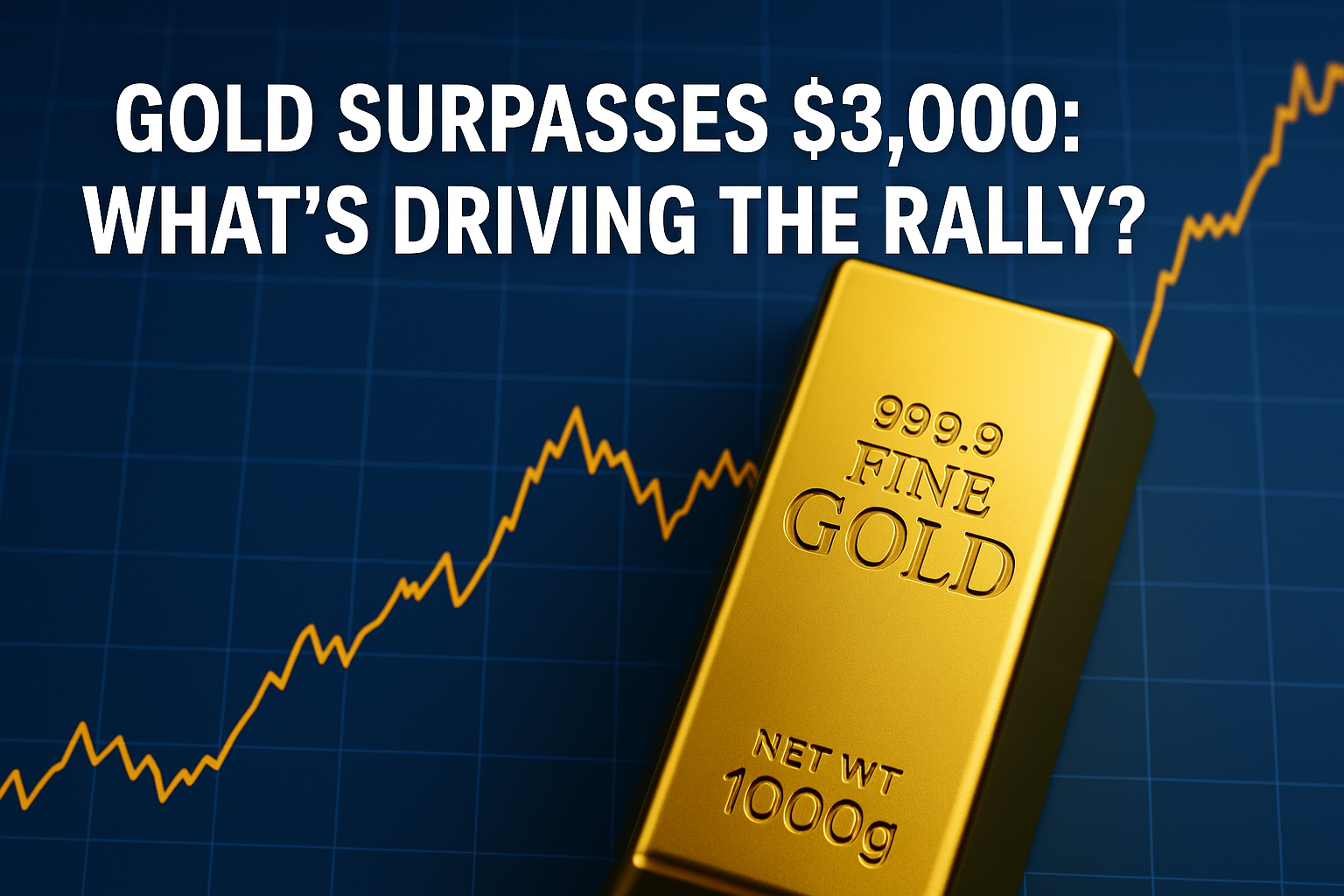
Gold has officially crossed the $3,000 per ounce mark—an event that has grabbed headlines worldwide. However, beyond the psychological milestone, the real story lies in the broader economic forces that have propelled this surge.
The Rapid Rise of Gold Prices

Gold’s rally has been nothing short of remarkable. It climbed from $2,500/oz to $3,000/oz in just 210 days, a surge that pushed prices three standard deviations above the 200-day moving average. This kind of price momentum reflects strong investor demand, but it also raises the possibility of near-term consolidation as markets digest the rapid ascent.
The Economic Forces Behind Gold’s Rally
Several key factors have contributed to this price movement:
Geopolitical and Geoeconomic Uncertainty: Ongoing global conflicts and economic instability have reinforced gold’s status as a safe-haven asset. Investors turn to gold during times of uncertainty, seeking protection against market volatility. Rising Inflation: Inflationary pressures remain persistent in many economies, eroding the value of fiat currencies and increasing demand for gold as a store of value. Lower Interest Rates: With central banks adjusting monetary policies to support economic growth, lower rates reduce the opportunity cost of holding gold, making it more attractive to investors. A Weaker US Dollar: A declining dollar boosts gold’s appeal, as it becomes cheaper for foreign investors to buy the metal, further driving up demand.
What’s Next for Gold?
While the speed of gold’s rise suggests a potential pullback or consolidation in the short term, the broader macroeconomic backdrop remains supportive. If uncertainty persists and inflation remains elevated, gold could continue to see strong investment demand.
For investors, the $3,000 milestone is a reminder of gold’s resilience and its role in wealth preservation. Whether this rally continues or experiences a temporary correction, gold’s fundamental drivers remain intact.
